
Jefferson Parish Arrest Records and Court Charges
Jefferson Parish arrest records can show that a person was taken into custody, booked, and associated with charge lines or bond information. Those charge lines may be early booking charges. They are not the same as a final court disposition. A court charge record begins when the District Attorney screens the matter and files, amends, reduces, refuses, or prosecutes charges in the 24th JDC or the parish courts.
That distinction affects every search. JPSO inmate results can show current custody, charge code text, arrest dates, and bond. The Clerk's criminal case record shows formal case activity after filing. The full case file and final disposition belong in Jefferson Parish County criminal court records, while the jail roster and booking side belong with inmate search records.
The JPSO bail bonds page is an official source for bond types after arrest. The image ties Jefferson Parish County arrest records to the release conditions that may appear beside booking charge lines.
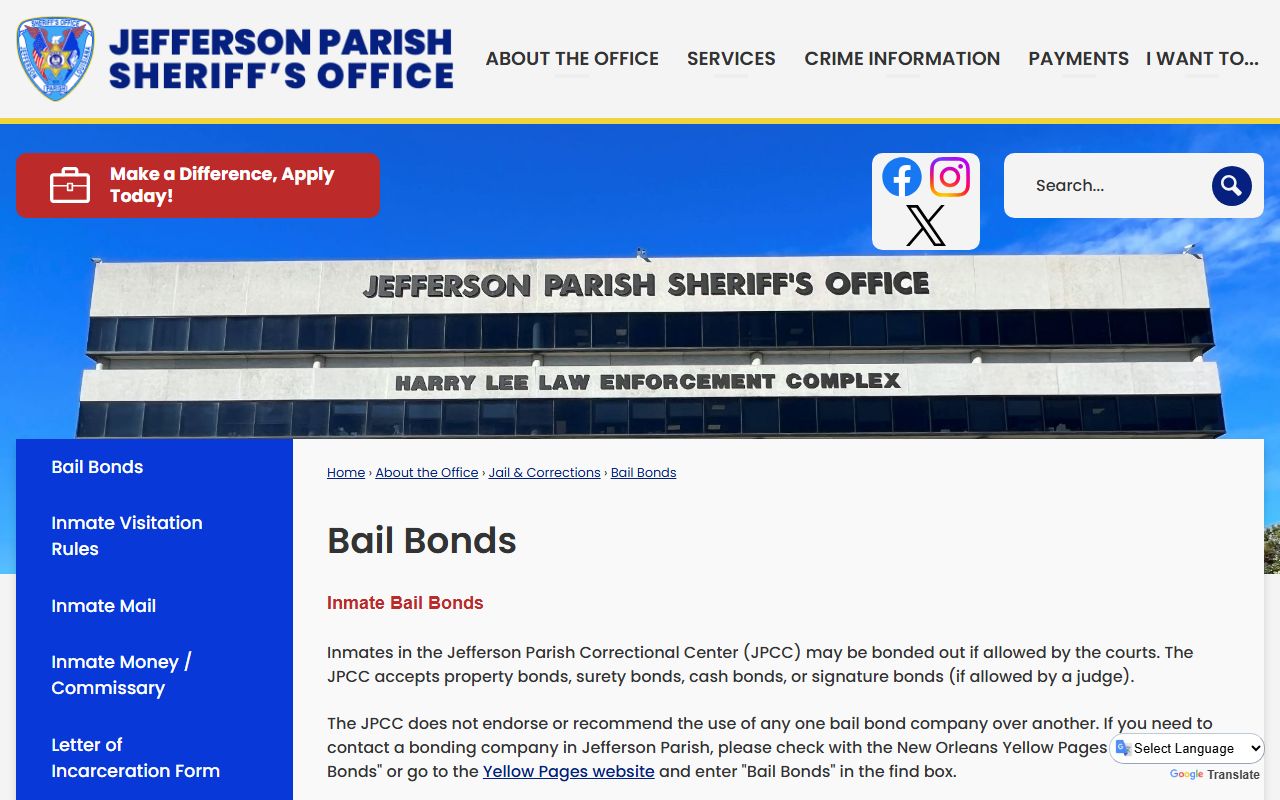
Bond information helps explain custody status, but it does not prove guilt or final court outcome.
Find Jefferson Parish Arrest Records
For the arrest side, the JPSO inmate search is the public route documented in the research. It can show name, Inmate CCN, race, sex, date of birth, arrest date, charge lines, and bond. For the court-charge side, use JeffNet or the Clerk's criminal records department once the case has moved into court. If the issue is an outstanding warrant or attachment, JPSO Warrants Processing and court-level records may be needed.
- Check whether the person is currently in custody through the JPSO inmate search.
- Read each booking charge line as an allegation or custody entry, not a conviction.
- Look for bond, "No Bond Set," attachment, fugitive, or related warrant-like entries.
- Use the Clerk's criminal records route to find filed charges and court events.
- Use DA information to understand who screens and prosecutes charges after arrest.
Jefferson Parish Charges After Arrest
After an arrest, charges can enter court through a complaint, bill of information, indictment, or other charging document. The research identifies indictment as a grand jury charging instrument and bill of information as a prosecutor-filed charging instrument. In Jefferson Parish, the District Attorney for the 24th Judicial District prosecutes criminal charges in district-court and parish-court settings.
| Document Type | Who Files or Returns It | What It Means |
|---|---|---|
| Complaint | Law enforcement or prosecutor, depending on case path. | An initial accusation that may start lower-court or early criminal process. |
| Bill of information | Prosecutor. | A formal charge filed by the DA without a grand jury indictment. |
| Indictment | Grand jury. | A grand jury charging instrument, often used for serious felony cases. |
The misdemeanor conviction expungement statute is one official source tied to charges and later relief. The image shows that court charge records may later intersect with Louisiana expungement law.
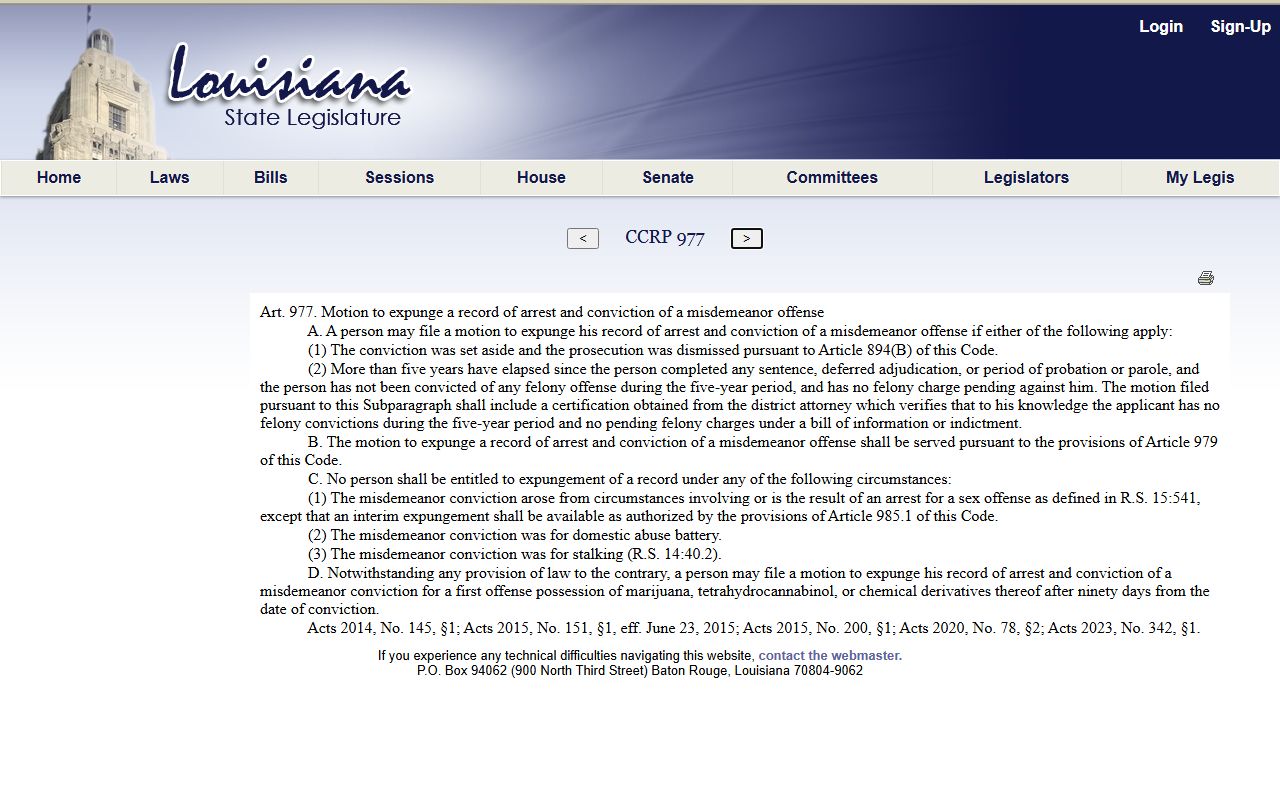
Expungement eligibility comes later in the process and depends on the legal result, not just the fact of arrest.
Jefferson Parish Charge Status
A charge can change between arrest and disposition. Booking charges may be accepted, amended, reduced, refused, dismissed, or replaced by filed charges. A case may also include attachments or warrant-like entries, such as the "ATTACH - MUN OR TRAFFIC ATTACHMENT" language observed in the JPSO inmate search research. Status terms should be read with court minutes and disposition entries.
| Status | What It Means |
|---|---|
| Pending | The charge or case has not reached final disposition. |
| Amended | The original filed charge changed to a different count, description, or severity. |
| Reduced | The charge moved to a less serious count or level. |
| Dismissed | The charge was ended by court action or prosecution decision. |
| Nolle prosequi | The prosecutor chose not to proceed on the charge. |
| Convicted | A guilty plea or verdict resolved the charge as guilt. |
The felony conviction expungement statute becomes relevant when a charge has led to a felony conviction and later relief is sought. The statute image links the status table to Louisiana's post-disposition rules.
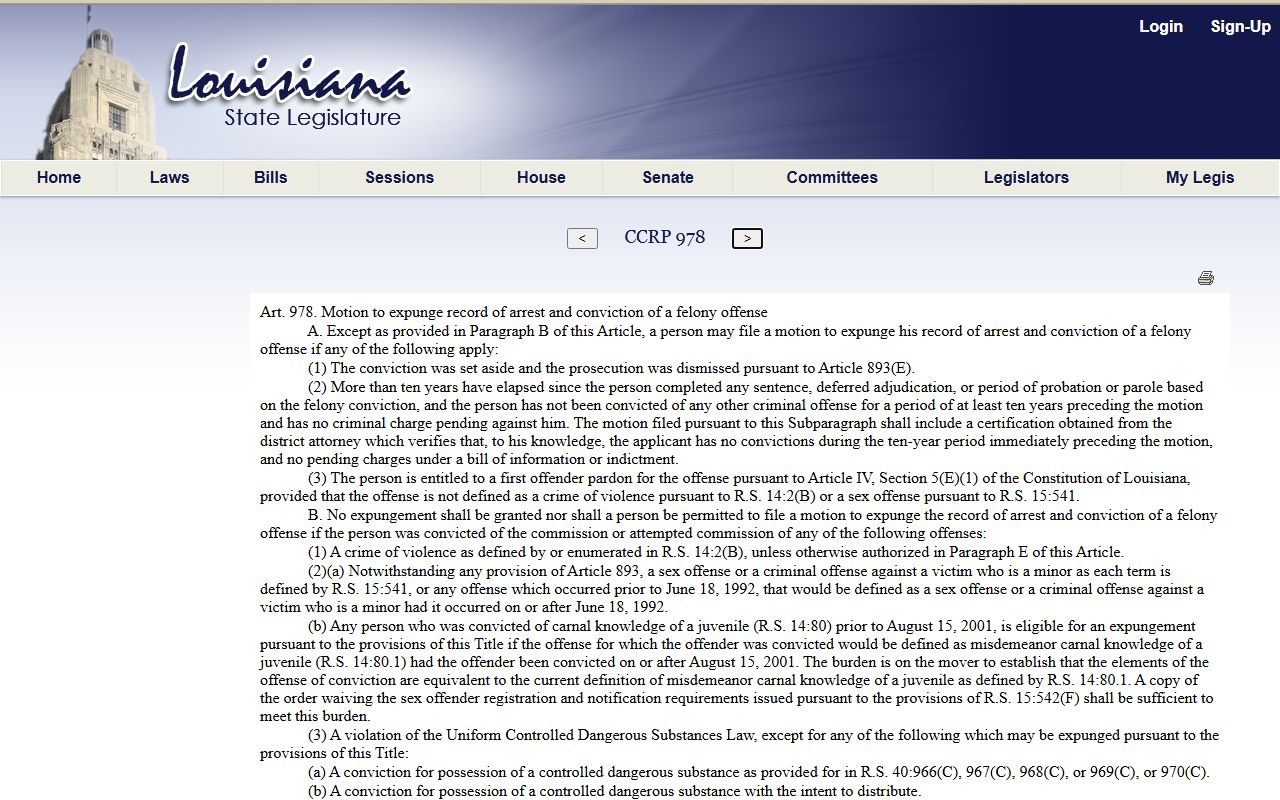
A pending charge, dismissed charge, and conviction have different public-record and expungement consequences.
Jefferson Parish DA Filed Charges
The Jefferson Parish District Attorney, 24th Judicial District, files and prosecutes criminal charges. The DA Parish Court Unit prosecutes misdemeanor and traffic cases in First Parish Court and Second Parish Court. Official research lists the First Parish DA office at 924 David Drive in Metairie and the Second Parish DA office at 200 Derbigny Street in Gretna. The DA determines whether arrest charges are accepted, refused, amended, or prosecuted.
This DA screening step is why an arrest record may not match the later court charge record. A JPSO booking line can list a charge and bond, while the court file may show a different filed charge, a reduced charge, a dismissed count, or a final disposition. The Clerk's court record is the route for formal case outcomes.
Jefferson Parish Charges vs Convictions
Being charged is not the same as being convicted. Jefferson Parish court charge records can show charges that remain pending, are amended, are reduced, are dropped, or end without a guilty finding. A conviction is the result of a guilty plea, verdict, or other legally recognized finding of guilt. Sentencing, probation, fines, court costs, or restitution follow only when the court orders them.
| Point | Charge | Conviction |
|---|---|---|
| Stage | Accusation after arrest or filing. | Final guilty outcome by plea or verdict. |
| Can change | Yes, charges can be amended or dismissed. | Changes require later court action or relief. |
| Record meaning | Shows what was alleged or prosecuted. | Shows what the court resolved as guilt. |
| Where to verify | Booking line, DA filing, or Clerk docket. | Criminal court disposition and sentencing record. |
Jefferson Parish Bonds and Attachments
Arrest records and charge records often include bond and warrant-like language. The JPSO bail-bonds page lists property, surety, cash, and signature bonds if allowed by a judge. Commercial bail bond applications are delivered to JPCC Intake Booking at 100 Dolhonde Street in Gretna. JPSO inmate charge examples also showed "ATTACH" entries and fugitive language, which can point to missed court, municipal or traffic attachment, or another hold.
Bond is a release condition. It is not a sentence. An attachment can be tied to a court order or failure to appear. When an attachment or warrant issue appears in the arrest record, the proper follow-up may involve JPSO Warrants Processing, First Parish Court, Second Parish Court, or the 24th JDC criminal records route.
Jefferson Parish Expunged Charges
Sealed records and expunged records are both restricted from ordinary public view, but they work differently. A sealed record is hidden because of a law or court order. An expunged Louisiana arrest or conviction record is removed from public access, but it is not destroyed. Law-enforcement and criminal-justice agencies may still have access under statutory exceptions.
| Point | Sealed | Expunged |
|---|---|---|
| Public view | Restricted by court order or law. | Removed from public access. |
| Record status | Still exists in the court system. | Still exists, but access is limited. |
| Common reason | Juvenile, sensitive, or court-sealed matter. | Eligible arrest, misdemeanor, felony, or DWI relief after filing and review. |
| Verification | Court order or custodian response. | Expungement order, statute, and Clerk filing record. |
The Louisiana expungement fee statute connects court charge records with the cost structure for relief. The statute image supports the local fee section below.
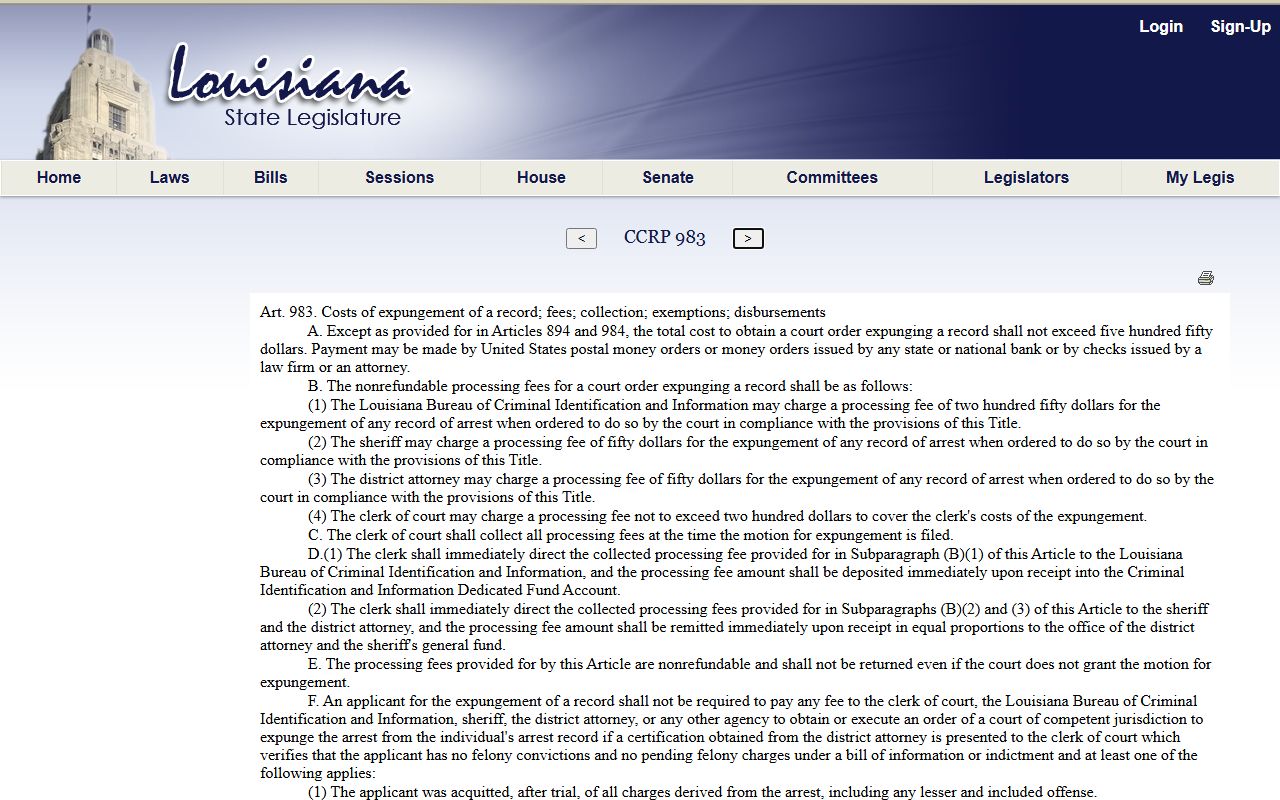
Fees and eligibility are separate questions, and payment does not guarantee that a judge will grant relief.
Jefferson Parish Charge Expungement
The Clerk fee research gives unusually specific local expungement costs. A felony or misdemeanor expungement is listed as $550 total, with $300 payable to the Jefferson Parish Clerk of Court and $250 payable to Louisiana State Police. A DWI expungement is listed as $600 total, with $300 to the Clerk, $250 to Louisiana State Police, and $50 to the Louisiana Office of Motor Vehicles. Credit-card payments are not accepted for expungements, and fees are nonrefundable even if the expungement is denied.
| Expungement Item | Local Amount / Note |
|---|---|
| Felony or misdemeanor expungement | $550 total: $300 Clerk and $250 Louisiana State Police. |
| DWI expungement | $600 total: $300 Clerk, $250 Louisiana State Police, and $50 Office of Motor Vehicles. |
| JPSO Review of Record | $50, nonrefundable, cash only, obtained within 60 days before filing. |
| Payment limit | Credit cards are not accepted for expungement fees. |
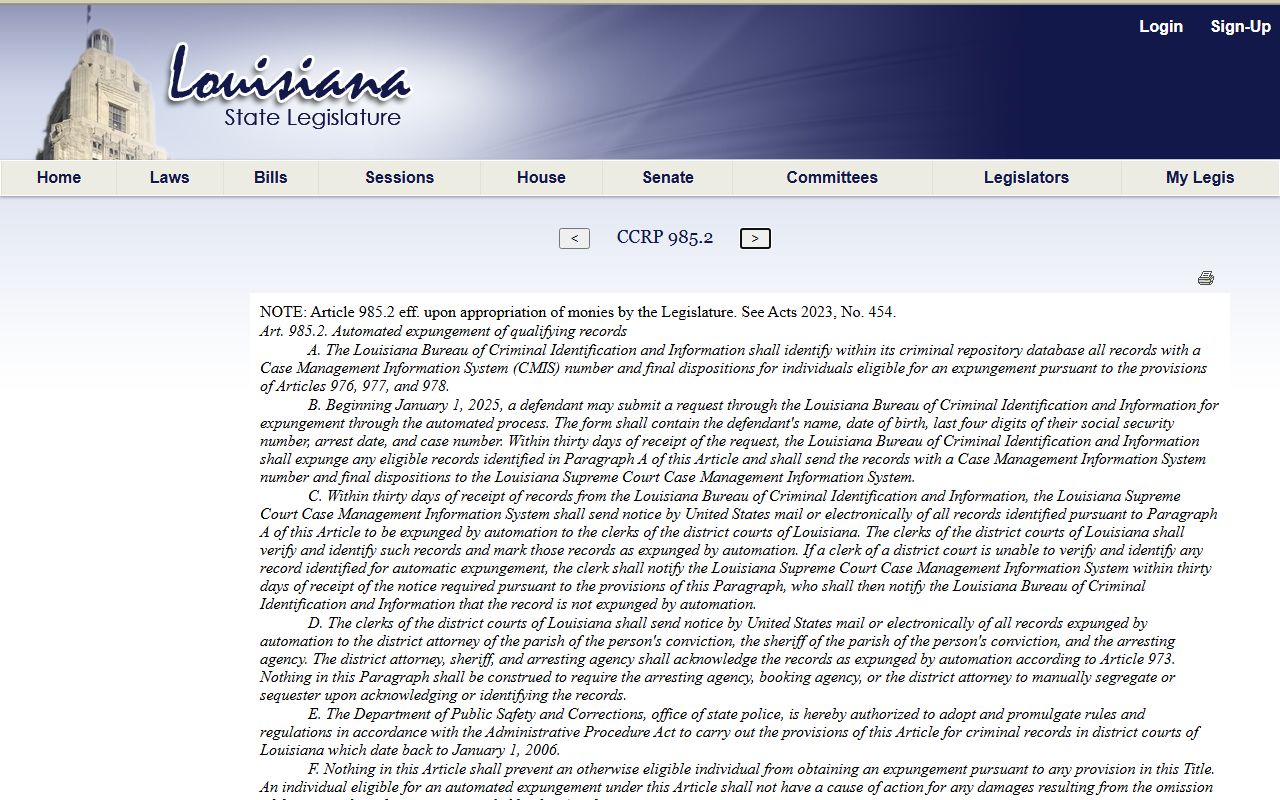
The automated expungement request statute adds a state-level process beginning January 1, 2025. The image shows a newer Louisiana process that directly affects Jefferson Parish arrest records and court charges.
Even with automated procedures, local Clerk filing mechanics and court eligibility still matter.
Restricted Jefferson Parish Charge Records
Several charge-related records are restricted. Juvenile records are confidential under Louisiana law and are not available through JeffNet for public examination. Expunged records are confidential with exceptions. Sealed records may not appear in a public search. Active law-enforcement and prosecution records may be limited under La. R.S. 44:3, especially while litigation or investigation is pending or reasonably expected.
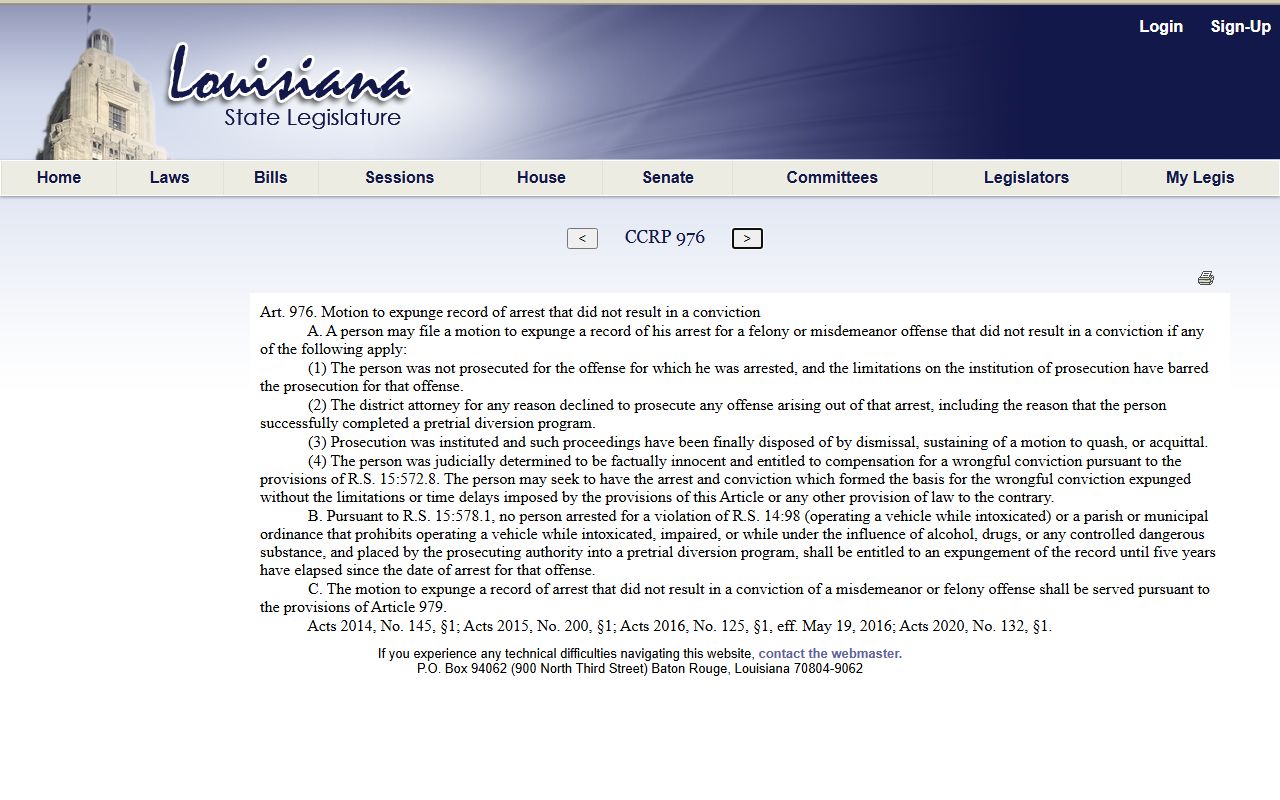
The arrest-not-resulting-in-conviction expungement statute applies to a key category of arrest records that did not end in conviction. The image is important because it connects a nonconviction arrest path to later public-access limits.
A missing public charge record can reflect lawful restriction, not necessarily an error in the search.
Note: Arrest charge lines, filed court charges, and convictions are separate facts and should be verified from their own custodians.